webdesign by valentin · designed + coded by hand
Every website looks the same now. Yours doesn't have to be one of them.
Same layout, same font, same three boxes under a big claim. I design and code yours from zero, by hand.
one fixed price, agreed in writing · everything in your name · one person, start to finish
the test
Would you send your link without wincing?
You know the moment. Someone says they'd love to see your work, and you feel a small drop in your chest, because the site is three years old, or half a finished template, or fine but nothing like you in person. So you send the Instagram instead.
That swap has a cost. The site that was built to introduce your business is the thing you've started hiding, and every referral who asks for a link runs into it before they run into you. A website you don't send isn't a website. It's a liability with hosting fees.
the diagnosis
Template sites aren't ugly. They're interchangeable.
Builders and page generators are genuinely good now, and that's the problem. They produce the average of every site ever made, so your business ends up wearing the same face as a dentist in Ohio and a dropshipper in Manchester. People notice the pattern even when they can't name it.
The demo that convinced you was designed, that part is true. It was designed around the demo's photos, the demo's short paragraphs, the demo's fake company. Pour your real content in and the design that sold you is gone. What's left is the sameness, and here's the unfair part: visitors read an off-the-shelf site as an off-the-shelf business. Wrong, often. It happens anyway.

proof, not claims
Don't take my word for it. Walk through one.
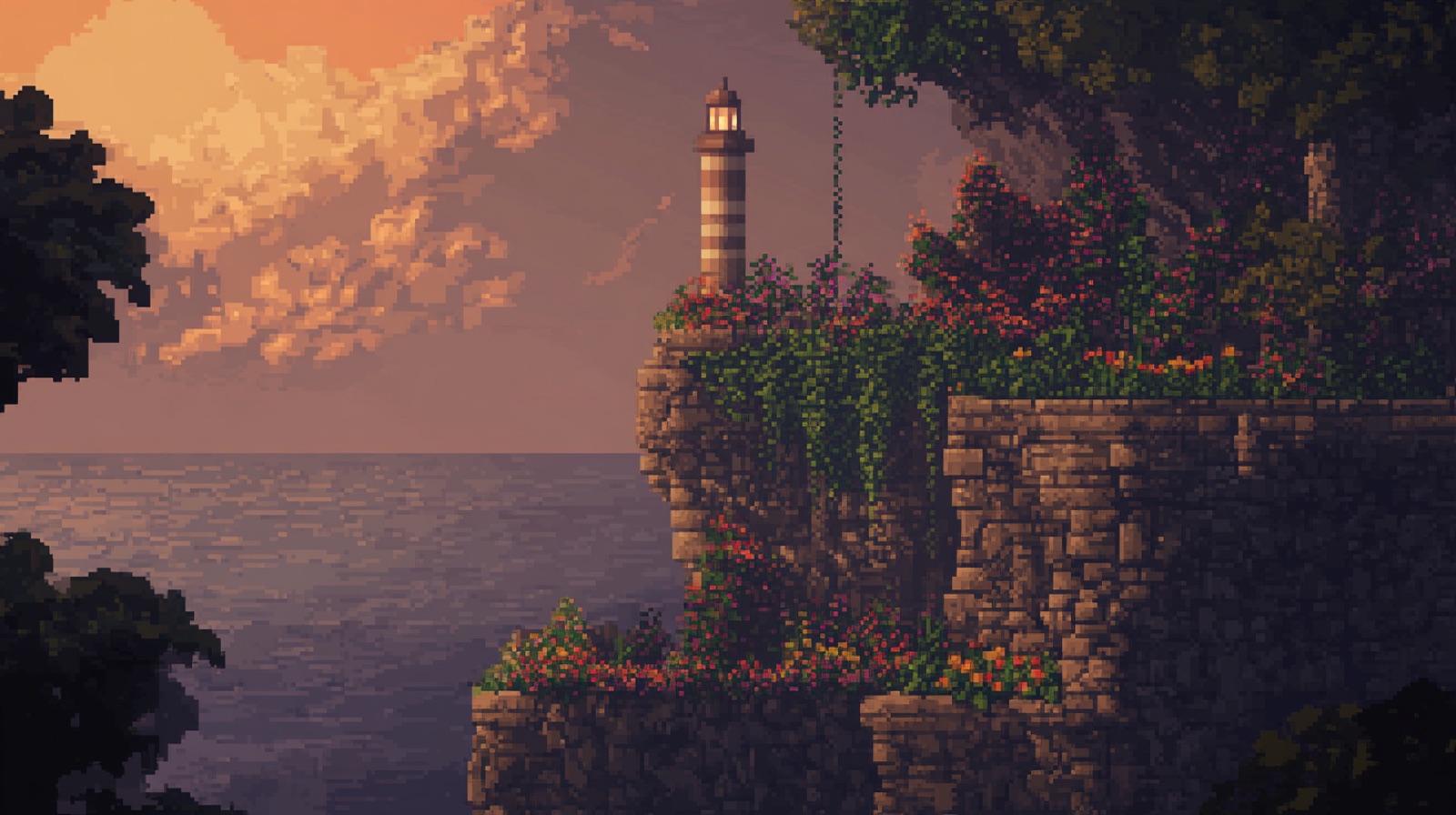
Anyone can write "hand-built" on a landing page, so I'd rather show you. lifedesignbox is my own brand's home. Every scene in it belongs to that one brand and nothing else, and the site around them is designed and coded from a blank file: the navigation, the small mechanics, the details you only find by wandering around. It's live, on your phone, right now.


Your site wouldn't look like this. That's the point. It would look like your business, because it starts from your business.
what custom actually means
Features built in. Not bolted on.
A template gives you the features it shipped with, and a wall the first time you need one it didn't. Booking that works the way you actually take appointments. A gallery that fits your work instead of cropping it. The odd calculator or configurator only your trade needs. On a builder those are plugins, workarounds, and another monthly fee. In a hand-built site they're simply part of the world, designed in from the first sketch, because the code is written for your business and nothing else.
The price works the same way. One fixed number, agreed in writing before the build starts, with the features we scoped inside it. Moving a button is not an invoice. If you want something genuinely new mid-build, we agree on it before it costs anything. No change-order ambush. No meter running.
in your name
You own every piece of it. From day one.
The horror stories in this industry share one plot. The designer goes dark, and the domain, the hosting, or the code turns out to be registered in their name, so the site is a hostage. Here's how this engagement is structured so that can't happen to you.
- Domain and hosting in your name from the first week. Not transferred later as a favor. Yours from the start.
- The full code handed over at launch. Every file. If we never spoke again, you'd lose nothing.
- A written scope with fixed milestones, so you always know what's done, what's next, and when.
- A defined post-launch window for fixes, in writing. Not a vague promise of ongoing support.
- A handover walkthrough, so you can change the everyday things yourself: text, photos, prices.
One more thing agencies won't tell you. The person you brief here is the person who designs the site and the person who writes the code. No account manager relaying your feedback, no handoff to whoever was free that week. Hiring one person has a real risk baked into it, which is exactly why everything above is yours on paper from day one.

I'm Valentin. Designer first, developer because design kept hitting walls that only code could get through. I run a one-person studio from Bangkok, and I build each site the way I built the world you can walk through above: from zero, by hand, for one business at a time.
This page is a sample of how I work. If it feels considered, that's the product.
valentin · bangkok

read this before you book
If a template covers what you need, use a template.
I'd rather lose a project than sell you the wrong thing. So, honestly:
- You need opening hours, a menu, and a phone number online by Friday. A builder does that well. Use one.
- You're choosing on price alone. The marketplaces run bid wars for exactly that, and I don't bid.
- You want a guaranteed ranking or a promised sales number. Nobody honest sells those.
- Your business has outgrown its template, and you feel it every time someone asks for the link.
- You need things a template can't do, and you want them built in, not duct-taped on.
- You want a site that could only belong to your business, owned by you, built by one person who answers.
If you found yourself in the second half of that list, we should talk.
how it works
Four steps. All of them in writing.
- 01The call. We talk through your business and what the site has to do. No pitch. If a template genuinely covers your case, I say so on the call and point you at one.
- 02Scope and price, in writing: what's being built, fixed milestones with dates, and one fixed number. You know the full cost before any work starts.
- 03The build. The world takes shape at agreed checkpoints. You review real pages in your real browser, not moodboards, and your feedback goes straight to the person building it.
- 04Handover. Everything changes hands: the code, the walkthrough, the defined window for fixes. After that the site is yours to keep, edit, or extend.
the honest answers
What you're probably still asking.
What does it cost?
It depends on the size of the world, and I won't pretend otherwise. What I can tell you is the shape of the number: one fixed price, in writing, before any work starts, with the scoped features inside it. If the number doesn't fit your budget, you'll know before you've spent anything.
You're one person. What if you disappear?
A fair fear, and an earned one. Half this industry's horror stories are a designer going dark with the domain in their name. It's why ownership here is structural instead of a promise: your name on the domain and hosting from the first week, the full code at launch, milestones in writing. If I vanished tomorrow you'd be annoyed. You wouldn't be stranded.
Do you use AI?
I use modern tools to build faster, like every working developer. What I never use is a template or a page generator. The design starts from a blank file and your business, and every decision on the page is one a person made on purpose. Tools assist. Nothing here starts from a theme.
Can I edit the site myself afterward?
The everyday things, yes. Text, images, prices, the parts that change with your business. The handover includes a walkthrough of exactly how. For structural changes you'd call me, or any developer you like, because the code is yours and written to be read.
Will it work on my phone?
It's designed on the phone screen first, because that's where most of your visitors are. The page you're reading is the sample. If you're on a phone right now, you're already looking at the answer.
How long does a build take?
That depends on the scope, and the scope document gives you dates before you commit to anything. What it won't be is open-ended. Fixed milestones exist because "nearly done" is where projects go to die.
Anyone can have a website. A world can only be yours.
start here
Bring the business. I'll bring the honest read.
Book a project call and tell me about your business and the site problem it's been dragging around. I'll tell you what I'd build, what the scope would look like, and whether hand-built is even the right answer for you. If it isn't, I'll say so on the call and tell you what to use instead. Either way, you leave knowing more than you came with.
no pitch. if it's not a fit, i'll say so and point you at what is.